Print Your Own Truth: Why the Scrappiest Voices Are Now the Loudest
Let me tell you something I've believed for a long time, something that's only gotten more obvious as the media landscape keeps eating itself alive: the most dangerous thing you can do in America right now is tell an unsponsored story.
Not dangerous in a melodramatic, clutch-your-pearls kind of way. Dangerous because it works. Dangerous because it cuts through. Dangerous because nobody owns it.
That's what independent publishing has always been about, whether we're talking about the pamphleteers who lit the fuse on the American Revolution or the photocopied zines that kept punk and queer culture breathing through the Reagan years. The tools change. The impulse doesn't.
Right now, something real is happening. A genuine, messy, beautiful rupture in the way media gets made and distributed. And if you're not paying attention to it, you're missing the most exciting story in journalism.
The Gatekeepers Are Exhausted
Let's be honest about what corporate media has become. Consolidation has gutted local newsrooms. Hedge funds have strip-mined once-respected outlets for parts. Algorithms have turned editorial decisions into engagement calculations. The result? A press that's technically free but functionally captured — not by government censors, but by advertiser anxiety and shareholder logic.
Into that vacuum, independent creators have walked. And a lot of them aren't walking timidly.
Look at what's happened with newsletters. Substack alone hosts writers pulling in subscriber bases that would have made a mid-size magazine editor jealous fifteen years ago. Matt Taibbi, whatever your politics around his recent work, proved that a single journalist with a strong voice and a direct relationship with readers could sustain a real operation outside the legacy infrastructure. On the left, writers like Judd Legum at Popular Information have built genuine investigative practices — breaking stories on corporate political donations that mainstream outlets ignored — funded entirely by reader subscriptions.
That's not a fluke. That's a model.
Zines Never Actually Died
Here's the part that surprises people who dismiss independent publishing as a digital-only phenomenon: print is back, and it never really left.
Across the country, zine fests are drawing serious crowds. The Denver Zine Fest, the Chicago Zine Fest, the massive Brooklyn Zine Fest — these events pack rooms with creators and readers who are hungry for something tactile, something that doesn't vanish behind a paywall or get throttled by an algorithm update.
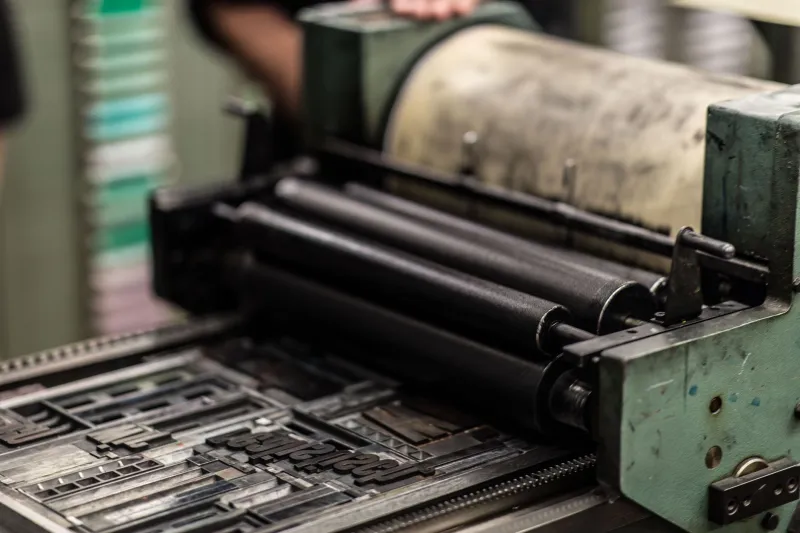
A zine costs almost nothing to produce. A risograph printer, a library photocopier, a borrowed stapler. The barrier to entry is basically your willingness to say something worth saying. And increasingly, people are finding that a well-made, honest zine about a hyper-local issue — a neighborhood's fight against a highway expansion, a community's experience with a specific employer, a scene's internal reckoning with its own contradictions — reaches people in ways that a polished digital feature simply cannot.
There's something about holding a physical object someone made with their hands that changes the relationship between writer and reader. It's intimate. It's not optimized. It's real.
Tools That Actually Work
Okay, practical talk. Because idealism without logistics is just a good mood.
If you're thinking about starting something — a newsletter, a podcast, a print publication, a hybrid of all three — here's what the most successful independent operators have figured out:
Own your audience. The single biggest mistake new creators make is building their entire presence on platforms they don't control. Instagram can shadowban you. Twitter/X can change its algorithm overnight. YouTube can demonetize you without explanation. Your email list is yours. Build it obsessively. Every platform you use should be a funnel toward direct contact with your readers.
Charge early, charge honestly. There's a reflex in independent media to give everything away for free because it feels more democratic. I understand that impulse, but it's financially suicidal. Readers who pay for your work are invested in your work. They become advocates. They stick around. A smaller paid audience is often worth more — in every sense — than a massive free one.
Collaborate, don't compete. The independent media ecosystem thrives on cross-pollination. Guest pieces, shared subscriber drives, collaborative investigations — these aren't compromises, they're force multipliers. The outlets doing this well are building genuine communities, not just audiences.
Distribution is editorial. Where your work appears shapes what it means. A piece published in a local independent paper hits differently than the same piece on a national platform. Think strategically about where your work lands and why.
The Authenticity Advantage
Here's what corporate media genuinely cannot buy: the trust that comes from being known as someone who won't sell out.
When readers know that your publication doesn't take advertising from the industries you cover, when they know you're not going to soften a story because a sponsor got nervous, when they know your editorial decisions are made by humans with actual convictions rather than by a traffic dashboard — that's an asset with real monetary value. Readers will pay for it. They're already proving they will.
I've been in independent media long enough to have watched a lot of projects fail and a few succeed. The ones that make it share a common quality: they're honest about what they are. They don't pretend to be something bigger or slicker than they are. They lean into the scrappiness because the scrappiness is part of the message.
You can't fake that. And audiences, especially younger ones who've grown up watching branded content try to pass itself off as journalism, can smell the fake from a mile away.
Start Ugly, Start Now
The worst version of your publication is the one that exists only in your head because you're waiting until it's perfect.
Every serious independent media project I've ever admired started rough. The first issues were uneven. The early episodes were too long. The design was held together with digital duct tape. That's fine. That's how it works. The refinement comes from doing the thing, not from planning to do the thing.
We're living through a moment where the infrastructure for independent publishing has never been more accessible and the hunger for it has never been more acute. Readers are tired of being processed through content machines. They want to hear from actual humans with actual stakes in the stories they're telling.
That's you. That's your project. That's the work.
The gatekeepers aren't going to step aside. But they don't have to. You can walk around them. People have been doing it forever, and right now, the path has never been wider.