Clicks Don't Build Power: The Case for Getting Off Your Phone and Into the Streets
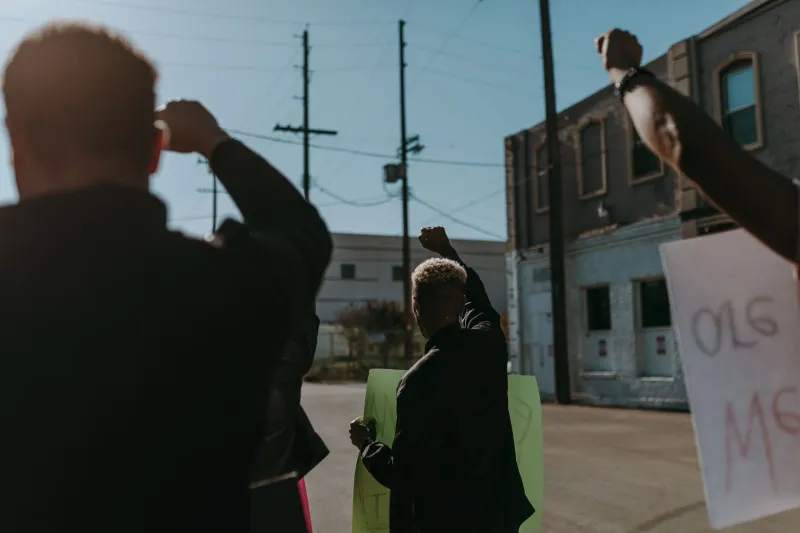
Let me be straight with you about something that's been gnawing at me for years now. We — and I mean the broad, progressive, change-hungry we — have been seduced. Not by money, not by the right wing, but by the intoxicating feedback loop of the internet. The like button. The share. The momentary dopamine rush of watching a righteous clip go viral and feeling like, yeah, we did something today.
We didn't.
The Illusion of Momentum
Here's what actually happens when something goes viral. A video of police brutality gets 40 million views. The quote-tweets are furious and eloquent. Celebrities weigh in. A hashtag trends for 72 hours. Then the algorithm — that cold, advertising-optimized machine — decides the engagement window has closed and buries it under a celebrity beef and a new trailer drop. The outrage evaporates. The system it was supposed to challenge? Completely intact.
This isn't pessimism. It's pattern recognition.
Social media platforms are not neutral infrastructure for dissent. They are privately owned attention-harvesting operations. Facebook, Instagram, X — whatever Elon's calling it this week — these companies profit from keeping you engaged, not empowered. Rage is engagement. Grief is engagement. Genuine political organizing, the kind that involves boring meetings and canvassing in the rain? That doesn't generate ad revenue. So the algorithm quietly throttles it.
We've been playing chess on someone else's board, by rules designed for us to lose.
What Actually Moves the Needle
Let's talk about the Sunrise Movement. In 2018, a few hundred young activists didn't launch a viral campaign first — they physically occupied Nancy Pelosi's congressional office. In person. Bodies in a hallway. That action, raw and unmediated, generated the kind of earned media and political pressure that no hashtag could manufacture. It helped force the Green New Deal into mainstream Democratic discourse. The social media coverage followed the direct action. Not the other way around.
Or look at the Fight for $15 campaign. Fast food workers in New York City walked off their jobs in 2012. They didn't go viral — most people didn't even hear about it at first. But they kept striking, kept organizing shop by shop, city by city, and over the following decade they managed to shift the minimum wage conversation in ways that permanently altered policy across multiple states. The algorithm had nothing to do with it. Solidarity did.
These aren't romantic exceptions. They're the rule. Every durable political victory in American history — labor rights, civil rights, marriage equality — was won through sustained, in-person, community-rooted organizing. The internet can amplify those efforts. It cannot replace them.
The Performative Trap
I want to be careful here not to punch down at individuals. People are exhausted. The cost of living is brutal. Showing up to an organizing meeting after a double shift is genuinely hard. I get it. And yes, online activism has real value: it spreads information, builds loose solidarity networks, and can rapidly mobilize people when an on-the-ground action is already happening.
But there's a specific pathology I want to name, and it's one I've seen swallow otherwise brilliant, committed people whole. It's the belief that visibility equals impact. That if enough people see your post, the world changes. That going viral is the same as winning.
It isn't. And the people who benefit from the status quo know it isn't, which is part of why they're perfectly happy to let you tweet.
Performative activism is the pressure valve that releases just enough steam to prevent the boiler from exploding. You feel like you did something. You didn't threaten anything. Everyone goes back to their day.
The Discipline of Showing Up
Real organizing is unglamorous. It involves knocking on doors in neighborhoods where you're not sure of your welcome. It means sitting in church basements arguing about strategy with people who see the world differently than you do. It requires the long patience of relationship-building — understanding that trust between organizers and communities isn't built in a news cycle, it's built over years.
The civil rights movement didn't happen because of a viral moment. It happened because of the Highlander Folk School, because of SNCC training workshops, because of the hundreds of local NAACP chapters doing grinding legal and community work for decades before Rosa Parks sat down on that bus. And Parks herself, let's be honest, was a trained activist. That moment was not spontaneous. It was organized.
That's the tradition worth reclaiming.
Where Should Your Energy Actually Go?
I'm not asking you to delete your accounts. Use the tools. But use them with clear eyes about what they can and cannot do.
Ask yourself: when was the last time you attended a local organizing meeting? Joined a union, or helped someone else join theirs? Showed up to a city council session? Knocked on a neighbor's door? Donated not to a slick national nonprofit with a marketing budget, but to a scrappy local group doing the actual work?
The algorithm optimizes for your attention. A movement optimizes for your presence.
There's a reason every serious organizer I've ever known treats in-person relationship-building as sacred and irreplaceable. It's not nostalgia. It's strategy. You cannot surveil a conversation that happens face to face in a living room. You cannot throttle a neighborhood association. You cannot shadow-ban a picket line.
Truth Doesn't Go Viral — It Gets Organized
I've spent a long time in the independent media space, trying to get truth out through channels that don't depend on corporate gatekeepers. And what I've learned, over and over, is that information alone doesn't change things. Organized people with information change things.
The viral moment might crack open a window. But somebody has to climb through it. That somebody is you — offline, present, committed, and willing to do the slow work that doesn't get a single like.
The algorithm won't save us. We're going to have to do that ourselves.