Ink, Rage, and Signal: Why the New Underground Press Is Winning
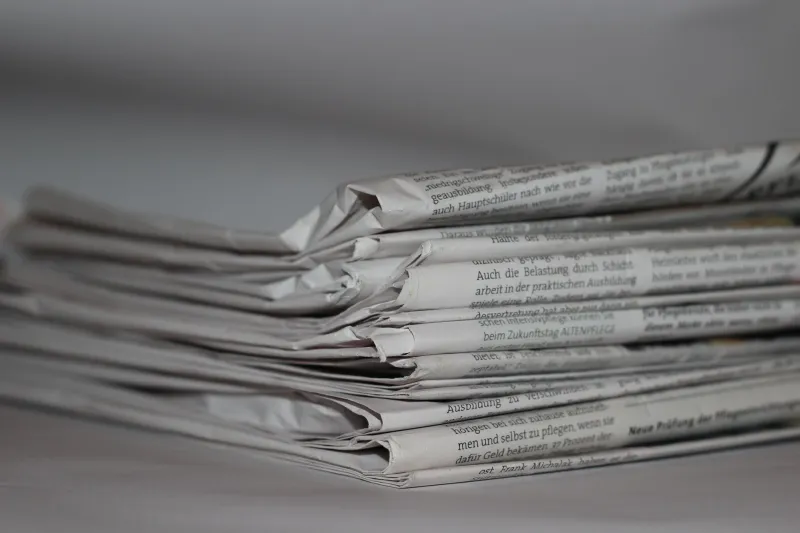
The spirit that drove mimeograph machines in Berkeley basements and lit up the Village Voice's early pages never actually died — it just went dormant, waiting for the right moment to erupt again. That moment is now. Across Substack newsletters, guerrilla podcasts, and hand-stapled zines, a new generation of activist-journalists is doing something the corporate press genuinely cannot: telling the truth without asking permission.
I've been in this game long enough to remember when "independent media" meant hauling boxes of freshly printed papers out of a rented van at 2 a.m. When I was running Soft Skull Press in the '90s, we weren't just publishing books — we were throwing a wrench into the machinery of a culture that had decided certain stories didn't deserve a platform. That instinct, that refusal to be quiet, is exactly what's driving the most exciting media work happening in America right now.
The Ghost of the Berkeley Barb Walks Again
Let's go back for a second. The underground press of the 1960s wasn't a niche curiosity. At its peak, there were over 500 underground newspapers circulating across the United States, from the Los Angeles Free Press to Chicago's Seed. These weren't vanity projects. They were organs of genuine political insurgency — covering the Vietnam War with a fury the mainstream press wouldn't touch, giving voice to the civil rights movement, the counterculture, and the anti-war left when Walter Cronkite was still hedging his bets.
What made those papers radical wasn't just their politics. It was their posture. They assumed the reader was an adult. They assumed the system was corrupt. They assumed that journalism had a moral obligation — not just a professional one — to confront power directly.
Somewhere between Watergate and the AOL-Time Warner merger, that posture got squeezed out of mainstream American media. What replaced it was a kind of studied neutrality that, in practice, almost always benefited the powerful.
The Tools Changed. The Mission Didn't.
Here's what's fascinating about the current moment: the technology has democratized in ways the Berkeley Barb's editors couldn't have imagined, but the underlying dynamic is remarkably similar. You have a concentrated, advertiser-dependent mainstream press that is structurally incapable of certain kinds of truth-telling. And you have a scrappy, distributed network of independent voices filling the vacuum.
Substack has become the mimeograph machine of 2024. Writers like Matt Taibbi, Katie Halper, and dozens of lesser-known but fiercely committed journalists have built direct relationships with their readers — bypassing editors, corporate owners, and the whole apparatus of institutional media gatekeeping. When Taibbi broke the Twitter Files story, he didn't go through the New York Times. He posted it in real time on a platform where his readers could follow along. That's not just a technological shift. That's a philosophical one.
Podcasting has done something similar for audio. Shows like Unauthorized Disclosure, Citations Needed, and The Dig are producing long-form investigative and analytical content that puts most NPR programming to shame — not because they have bigger budgets (they absolutely don't), but because they aren't trying to please a board of directors or a major donor class. They're trying to figure out what's actually true and say it out loud.
And then there are the zines. Don't sleep on the zines. From Brooklyn to Portland to Albuquerque, people are still cutting and pasting and photocopying and distributing physical objects with their bare hands. There's something about the materiality of a zine — the ink smell, the slightly crooked margins, the obvious labor of it — that carries a different kind of authority than a pixel on a screen. It says: someone cared enough about this to make it real.
Why Authenticity Is the Only Sustainable Business Model
The conventional wisdom in media circles for the last two decades has been that independent journalism is financially doomed. Scale up or die. Get acquired or get irrelevant. I never bought it, and the evidence increasingly supports the skeptics.
Reader-supported media is not just surviving — it's demonstrating a kind of resilience that ad-supported legacy outlets can only envy. When your revenue comes directly from the people who read you, your incentive structure is radically different. You're not optimizing for clicks that please an algorithm. You're not softening a story because the subject happens to be a major advertiser. You're accountable to your audience in the most direct way possible: if you stop telling the truth, they stop paying you.
This is, in a very real sense, the economic model the underground press was always trying to articulate. The Berkeley Barb charged a dime. Soft Skull charged whatever we thought people could afford. The transaction was never purely commercial — it was a statement of solidarity, a way of saying I believe in what you're doing enough to keep it alive.
That dynamic hasn't changed. If anything, it's more explicit now. When someone subscribes to an independent newsletter or becomes a patron of a podcast, they know exactly what they're doing. They're opting out of the corporate media ecosystem and choosing to fund something that operates by different rules.
The Danger of Nostalgia (and How to Avoid It)
I want to be careful here, because nostalgia is a trap. The underground press of the '60s wasn't perfect. It had serious blind spots around race and gender. Some of it was sloppy. Some of it was paranoid. Romanticizing it wholesale would be its own kind of dishonesty.
The best of what's happening now isn't trying to recreate 1968. It's trying to recover a principle — the idea that journalism has a moral core, that it exists to serve the public rather than power, and that the people doing it should be willing to pay a personal price for that commitment. That principle doesn't belong to any decade. It's as old as the printing press and as urgent as tomorrow's news cycle.
What gives me genuine optimism is that the audiences are there. People are hungry — genuinely, desperately hungry — for media that doesn't treat them like passive consumers to be managed. They want to be challenged. They want complexity. They want someone to look at the official story and ask, out loud, whether it holds up.
The Work Continues
I've spent most of my adult life trying to contribute to that project — through Soft Skull, through my own journalism, through activism, through art. The form keeps changing. The impulse doesn't.
If you're a young writer or journalist reading this and wondering whether there's room for you in a media landscape that seems simultaneously oversaturated and starved of real content — there is. The infrastructure exists. The audience exists. What's needed is the courage to say something true and the discipline to say it well.
The underground press never really went away. It just needed a signal boost. Consider this yours.