Save Everything: Why Self-Documentation Is the Most Political Act You Can Commit
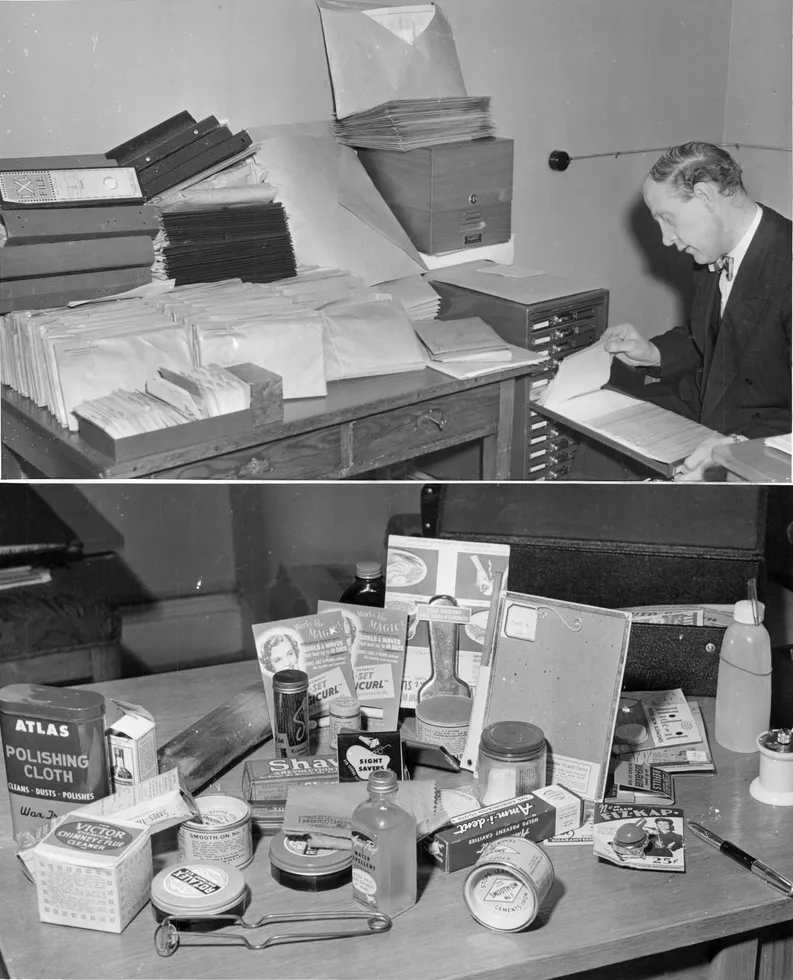
Photo: Unknown photographer, Public domain, via Wikimedia Commons
Somewhere in a storage unit in East Nashville, there are seventeen boxes of cassette tapes, handwritten setlists, photocopied flyers, and recorded phone conversations that document nearly two decades of a local music scene that no music journalist ever covered. The person who collected all of it is a 54-year-old sound engineer named Marcus Webb, who started taping everything in 1998 because, as he put it, "I knew no one else was going to."
Marcus isn't a historian. He's not affiliated with a university or a museum or a cultural institution of any kind. He's just someone who understood, early and intuitively, that the stories that don't get told by official sources don't get told at all — unless somebody decides to tell them anyway.
That instinct — to document, to preserve, to insist on the record — is spreading. And it's not just about music scenes or local culture. It's becoming one of the most significant forms of political resistance available to independent creators right now.
The Archive as Counter-Narrative
Here's the thing about official history: it's always a selection. Every archive — whether it's a presidential library, a newspaper morgue, or a museum collection — reflects the priorities and biases of whoever assembled it. What gets saved tells you as much about power as what gets made. The history of American social movements is full of gaps and erasures that weren't accidental. The FBI didn't just surveil civil rights leaders — it systematically worked to destroy their records, discredit their documents, and ensure that the official narrative would be the only one that survived.
That's the context in which self-documentation becomes political. When you decide to control your own archive, you're not just being organized. You're refusing to let someone else decide what your story means.
This is something that marginalized communities have always understood, often out of necessity. The African American community built its own archival institutions — the Schomburg Center in Harlem being the most famous example — precisely because mainstream institutions weren't preserving Black history. LGBTQ+ activists during the AIDS crisis documented everything with ferocious urgency because they knew the mainstream press was either ignoring them or misrepresenting them. The archive was the antidote to the lie.
What Contemporary Creators Are Doing
Today's version of this impulse looks different, but the underlying logic is the same. Independent creators across the country are building personal and community archives in ways that would have been technically impossible twenty years ago and are still being largely ignored by cultural institutions.
In Detroit, a collective of photographers called the Rust Belt Visual Archive has been conducting recorded interviews with longtime residents of neighborhoods that are being rapidly gentrified, pairing audio testimony with documentary photography and storing everything in a community-controlled digital repository. They've explicitly chosen not to seek institutional funding or academic partnerships because, as one member explained, "the moment an institution owns the archive, the institution decides what the archive means."
In New York, a group of activists who were involved in the Occupy movement a decade ago have spent the last three years reconstructing the documentary record of that moment — gathering photos, videos, flyers, and firsthand accounts that were scattered across personal hard drives and social media accounts before platforms started purging old content. The resulting archive, which they host independently, is already being used by researchers who found that the official media record of Occupy was dramatically incomplete.
In rural Appalachia, community radio stations are recording oral histories of labor organizing in coal communities — interviews with miners, union organizers, and their families — and distributing them on physical drives to libraries and community centers across the region, specifically because they don't trust digital platforms to preserve them.
The Platform Problem
This brings up something that doesn't get discussed nearly enough: the archive is disappearing in real time, and platforms are doing the disappearing.
MySpace deleted twelve years of music uploads in 2019 — somewhere between 50 and 53 million songs, according to estimates. Gone. Tumblr's content purges have wiped out enormous amounts of queer cultural production. Twitter/X's chaotic ownership changes have made years of documented public discourse suddenly inaccessible or unreliable. Every time a platform pivots, gets acquired, or simply decides that old content isn't worth storing, a piece of the cultural record evaporates.
Creators who built their documentary record exclusively on platforms are discovering that they don't actually own their own history. The platform does. And the platform's priorities have nothing to do with preservation.
This is why the most forward-thinking independent creators are increasingly maintaining what you might call a "platform-agnostic" archive — a record of their work that exists independently of any single platform, in multiple formats, in multiple physical and digital locations. It's more work. It requires intention and discipline. But it's the only reliable way to ensure that the record survives.
Documentation as Practice
There's another dimension to this that's worth naming: the act of documentation changes the act itself.
When you decide to record an interview, photograph a meeting, or transcribe a conversation, you're making a statement about the value of what's happening. You're saying: this matters enough to preserve. That changes how participants relate to the work. It introduces a kind of accountability and intentionality that casual, undocumented activity doesn't have.
Several activist organizations have told me that they started keeping detailed records of their meetings and actions not primarily for historical reasons, but because it made their work better. When you know the record exists, you show up differently. You're more precise. You're more honest. The documentation creates a feedback loop that sharpens the practice.
What to Save and How
If you're an independent creator who hasn't thought seriously about your own archive, here's where to start: save everything, and save it in multiple places.
Physical copies matter. Hard drives fail. Cloud services get discontinued. A printed photograph in a box in a closet has a longer expected lifespan than almost any digital storage medium currently available. Don't make the mistake of thinking that because something exists digitally, it exists permanently.
Build relationships with community archives, local libraries, and university special collections. Many of these institutions are actively looking for material that documents contemporary independent culture, and they have the infrastructure to preserve it in ways that individuals can't. You can donate copies of your work while retaining your own.
And document the process, not just the product. The finished album matters, but so do the rehearsal recordings, the rejected drafts, the emails where you worked out what you were trying to do. That's the material that future researchers — and future versions of yourself — will actually learn from.
Marcus Webb in Nashville is slowly digitizing his seventeen boxes of cassettes. He's not sure what will happen to them when he's done. But he knows they exist, and he knows what they contain, and he knows that the story they tell wouldn't exist anywhere else.
That's enough. That's the whole point.